![[{[item.product.name]}]]([{[item.product.photo.url]}] 75w)
For free delivery are missing -,--
Order Summary
Sum 0,00 Kč
Price includes discounts

Regulations in the ILCA Class – Introduction and Overview
2024-08-21 15:40:00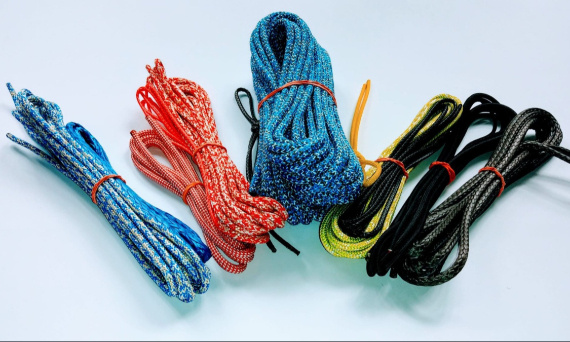
The ILCA (International Laser Class Association) is one of the most popular sailboat classes in the world. Due to its simple design, precise regulations, and high technical demands, the ILCA attracts both beginner and experienced sailors. One of the key aspects of competitive sailing in this class is the rigging and equipment regulations, which allow the boat to be adjusted to weather conditions and the sailor's preferences. In this article, we will discuss the basic regulations listed in the attached table, focusing particularly on the "Primary" and "Secondary" systems and their dimensions.
What are "Primary" and "Secondary"?
In the context of rigging regulations, "Primary" refers to the main line used to adjust a specific element of the boat. This is the line with which the sailor does not have direct contact.
On the other hand, "Secondary" refers to the length of the line that runs from the adjusting element to the cleat, where the line is secured after setting its appropriate length or tension. This line is directly controlled by the sailor.
Discussion of Regulations for Cunningham, Outhaul, and Boom Vang
-
Cunningham:
- Primary: Diameter 3 mm, Length 1.2 m
- Secondary: Diameter 4 mm, Length 3.5 m
- The Cunningham is a device used in sailing to precisely adjust the tension of the sail's leading edge, known as the luff. It is a line-based adjustment system that allows the sail's shape, especially its upper part, to be altered by bringing the luff closer to or farther from the mast. The Cunningham allows sailors to adapt the sail to changing wind conditions, improving performance and control over the boat.
-
Outhaul:
- Primary: Diameter 3 mm, Length 1.5 m
- Secondary: Diameter 4 mm, Length 6 m
- The outhaul is a system that regulates the tension of the sail's foot. By increasing or decreasing the tension of this line, the sailor can adjust the sail's shape, affecting its aerodynamics and performance in different wind conditions.
-
Boom Vang:
- Primary: Diameter 3 mm, Length 1.5 m
- Secondary: Diameter 4 mm, Length 5 m
- The boom vang controls the angle of the boom relative to the mast, which is crucial for shaping the mainsail, especially when sailing upwind. The specified lengths allow for precise adjustment of the boom's position.
Additional Elements
- Mainsheet: Diameter 6 mm, Length 14 m
- Traveler: Diameter 5 mm, Length 3.6 m
- Daggerboard Elastic: Diameter 6 mm, Length 2 m
- Clew Strap: Length 1 m
Each of these elements plays a specific role in the ILCA rigging system, with the mainsheet controlling the sails, the traveler adjusting the boom's position relative to the wind, the daggerboard elastic stabilizing the daggerboard, and the clew strap securing the sail to the boom.
Summary
Regulations in the ILCA class are essential for optimizing boat performance. Understanding how the "Primary" and "Secondary" systems work and the ability to adjust line lengths according to conditions is crucial for achieving good results in regattas. Precise dimensions and proper use of each element allow the sailor to have full control over the boat, which is critical in changing wind conditions.